(来源:CGTN 2026-10-20)
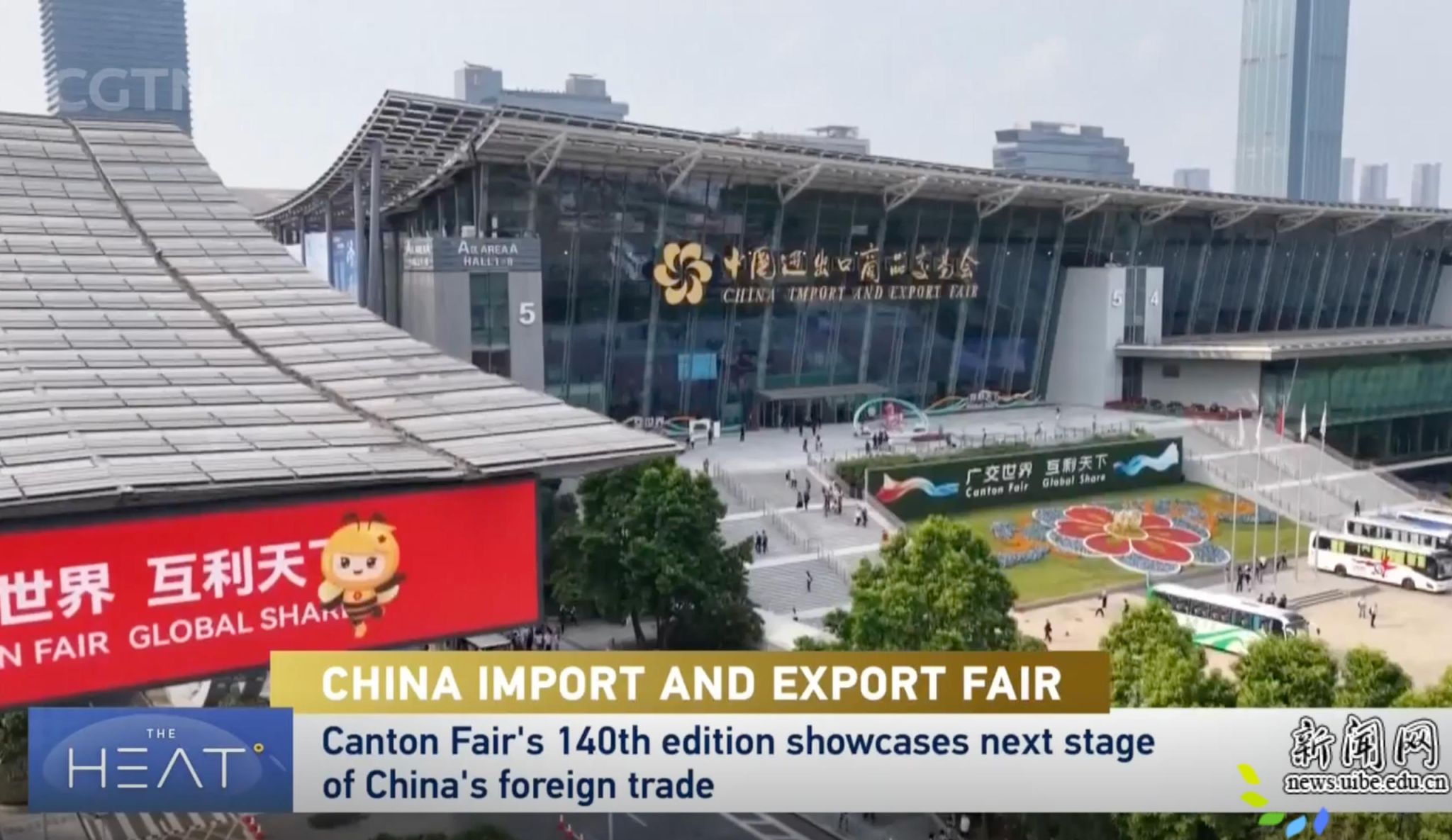
Green and high-tech products have taken center stage at the 140th China Import and Export Fair, or Canton Fair. Marking its 70th anniversary, the fair is China’s largest and longest-running trade expo. More than 30,000 companies are exhibiting across three phases running through November 4, and on the first day alone, about 86,000 overseas buyers from more than 200 countries and regions attended. The opening phase put advanced manufacturing in the spotlight.
For 70 years, the Canton Fair has been held twice a year, and it serves as a living microcosm of China’s manufacturing transformation.
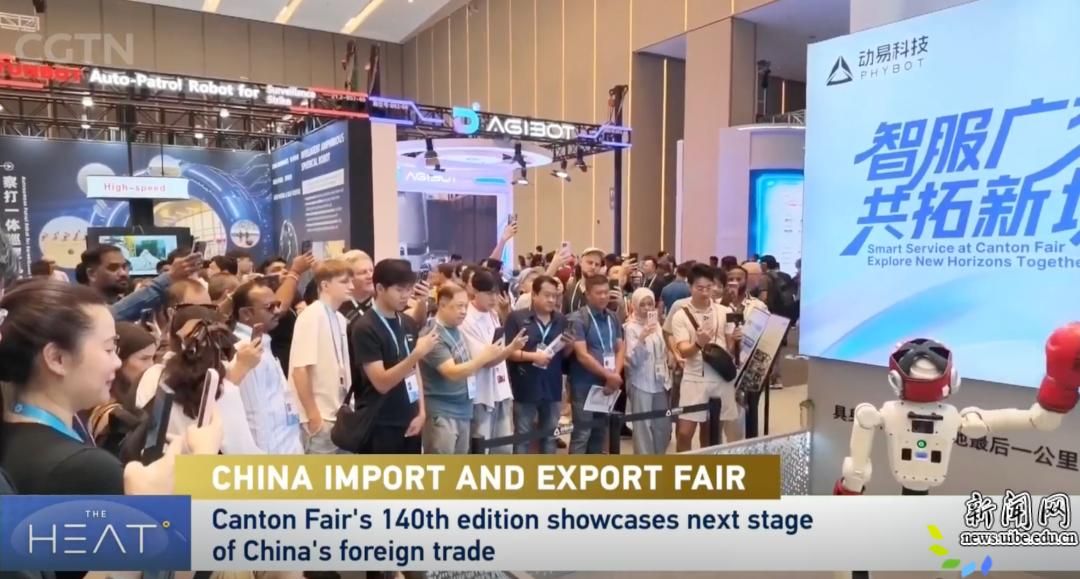
Speaking on CGTN’s panel discussion program The Heat, Assistant Professor Cui Yuyang of the China Institute for WTO Studies at the University of International Business and Economics said the headline of Phase One, themed “advanced manufacturing,” was “robots, drones and embodied AI.” The phase, which ran from October 15 to 19, featured 19 exhibition areas ranging from electronics and home appliances to industrial automation, along with 17 zones for emerging and future industries such as service robots, drones and new displays. Visitors could see humanoid robots, robot dogs, and smart wearables such as AI translation devices and VR glasses.
“The key point is that these are no longer lab demos,” Cui said. “Buyers can ask about price, delivery and after-sales service. That’s the difference between invention and diffusion.” Cui noted that China’s strength lies in taking a technology to mass production quickly and cheaply, describing Phase One as a story of diffusion — a pattern previously seen with solar panels and electric vehicles, and now with robots.
Against a backdrop of trade disruptions driven by regional conflicts, volatile energy costs and U.S. tariffs, Cui said the fair plays different roles for different participants. “For big firms, it’s a showroom; for small firms, it’s a lifeline,” Cui said. While large companies already have global networks, the fair offers small and medium-sized enterprises — including more than 11,000 specialized firms and single-product champions at this session — the cheapest way to meet hundreds of buyers in a few days.
Cui highlighted three functions of the fair. First, it helps exporters diversify: with buyers from more than 200 countries and regions, firms depend less on any single market, which Cui said helps explain why China’s exports have kept growing despite tariffs. Second, it sends market signals that push exhibitors to upgrade. New products make up nearly a quarter of exhibits and green products about a quarter, both record highs, and about two-thirds of exhibitors already use AI or the industrial internet. Third, it builds long-term ties. This session introduced a buyer alliance, year-round buyer registration and livestreaming to overseas buyers for the first time, “so the relationship doesn’t stop when the fair closes,” Cui said.
The fair is not only about exports. Cui noted that it also has an import section, and that China’s imports grew faster than its exports in the first three quarters of this year — about 22 percent versus 16 percent in yuan terms. “The fair is as much a learning platform as a sales platform,” Cui said. “It pushes exporters to compete on value, not just price.”
Looking ahead to the second and third phases, Cui offered a framework for thinking about digital infrastructure, breaking it down into three layers: “connect, compute and transact.” Connect refers to “networks like 5G, fiber broadband, and the undersea cables that carry most international data”; compute to “data centers, cloud and AI computing power”; and transact to “the systems that let trade happen online — e-commerce platforms, digital payments, e-customs and smart logistics.”
The fair’s second and third phases, themed “Quality Home” and “Better Life,” focus on household goods, textiles, food and other consumer products — trade dominated by smaller firms and smaller orders, which relies most heavily on that transact layer.